

Trading vs. investing is a debatable topic over the last few years; some people say trading is better than investing, while others say investing is great and has no tension and worry about other factors.
Before saying anything good or bad about both instruments, you must understand their nature, differences, advantages and disadvantages.
What is Trading in the Stock Market? Is it the same as Physical Trading?
Trading means buying and selling underlying assets to make a profit. Underlying assets can be of different types, like stocks, bonds, commodities, steel, paint, animal, etc. Trading in commodities is good because it transfers value from one buyer to another buyer. Trading is a transfer of goods from one place to another.
Today we talk about trading in stocks, it is in future and options and intraday. Trading in derivatives requires less capital. In derivatives, the underlying asset can be traded on the basis of contracts.
Contracts have expiry dates, and after expiry day, contracts losses it’s value, and it becomes zero. Derivatives have volumes of buyers and sellers.
Intraday trading happens generally in stocks; intraday has a margin facility, which is provided by brokers. In an intraday, a retailer can buy and needs to sell those stocks on the same day, otherwise they need to pay charges to exchanges.
Swing trading requires more capital than the other two trading style means Future and Options, and Intraday. Swing trading needs charts and patterns knowledge to deploy capital and manage risk per trade to loss less.
All trading styles require technical analysis. Technical analysis includes chart reading, patterns, volume, news, indicators, etc., to take correct decision.
What is Investing in equities and mutual funds in 2026?
Investing means deploying your money, capital, or cash to meet the demands of businesses. Investors have more free money, while business owners need money to run and expand their business, so they make a deal. In that deal, business owners dilute their equity and get money from investors.
Investors get shares of that company in return for their deployed capital. Businessmen make a profit from customers and share it back to the investors in the form of dividends.
In investing, investors make huge returns while holding shares for the long term, but in trading it need to sell fast. With the help of fundamental analysis, investors make a decision to invest or not in any company. Fundamental analysis means analysing companies’ ratios, history, growth factors and comparison with industry peers to take inform decisions.
Check our Tools :- Silver Rate Today in India
Trading Vs Investing key Differences To Know Before Starting
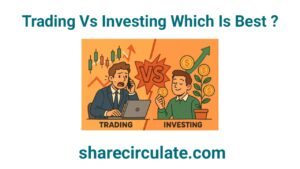
Trading vs. investing there are many key differences. First is time, in trading it can be held for minutes and day. Investing is for 5-10 years and some times lifetime holding period.
Trading is a zero-sum game, which means money is transferred from one person to another. No perfect outcome is defined in Futures and Options, but in equities trading is not a zero-sum game. On the other hand, investing has a positive sum game in that everyone makes money when the stock goes up and whenstock go down, then everyone loses money.
If a company is delisted from stock exchanges like NSE and BSE in indian then everyone loses their investment money. But this happens very rarely if the founder is found to be doing a scam, businesses are in losses, etc.
In trading, you need to be right two times: first is what, and second is when. Let’s take an example: you need to choose which stock to trade and when you should buy it. If any one factor is missing, then your chance of losses is very high.
| Differences | Trading | Investing |
|---|---|---|
| Time | Minutes to Days | Years |
| Type | Zero Sum Game | Positive Sum Game |
| Risk | High | Low |
| Returns | Less | High |
| Efforts | Very High | Medium |
| Analysis Style | Technical | Fundamentals |
| Value Addition | No Value in peoples Life | High Value |
Investing indirectly creates jobs and helps the economy to grow in GDP terms, but trading creates no value in society.
Trading Vs Investing: Which is Best For New Comers or Experienced?
It depends on you; if you want to generate wealth, then investing is far better than trading. But if you like to play with ticker symbols and love math, then trading is good.
Risk and Volatility Exposure
Trading carries a higher risk due to market volatility and rapid price movements. Investing reduces risk by spreading it across time and relying on long-term market growth rather than short-term fluctuations. Due to high risk in stocks many people choose Mutual Fund Star SIP to mitigate their risks.
Skill and Knowledge Requirements
Trading demands advanced technical knowledge, quick decision-making, and emotional control. Investing requires an understanding of financial fundamentals, economic trends, and long-term planning.
Capital and Cost Considerations
Trading often involves higher transaction costs due to frequent buying and selling. Investing typically has lower costs, as assets are held for longer periods with fewer transactions.
Emotional Discipline and Stress Levels
Trading can be emotionally demanding, as constant market monitoring may lead to stress and impulsive decisions. Investing promotes a calmer approach, encouraging discipline and patience during market ups and downs.
Wealth Creation Potential
Trading can generate faster returns but with inconsistent outcomes if risk is not managed properly. Investing builds wealth steadily and sustainably, benefiting from compounding and long-term growth.
Choosing the Right Approach
The best method for generating wealth depends on personal goals, risk tolerance, and time availability. Trading suits those who enjoy active market participation, while investing is ideal for individuals seeking stable and long-term financial growth. Many people find success by combining both approaches strategically.
How Sanju Pawar Lost 100,000 in Trading From 2020 to 2025: Shocking Story in My Hometown
Sanju Pawar is a very known person in my hometown Dhanora, in Lonar Taluka. He started his career in the stock market after the coronavirus. But at that time, he lost his job and shifted to Dhanora. Then he started learning from YouTube videos, and without understanding risk and loss profile, he directly jumped into options and futures trading.
He thought he could make money overnight by trading low premium options I told him don’t do this, you already lost your job, and you have no income sources as of now.
He started and earned 10k from the first trade, then his ID psychologically boosted and he invested 20K more without understanding what is theta and gamma. He loses money because of time decay.
He is in a mental addiction state of trading, after losing 100,000, he quit and left trading fully. Again in 2023, he started with investing in equity with 50K capital. Now he understands what the market is, how it moves, and that fundamentals are more important than news sentiment. He earned that lost money and is currently living in Dhanora and doing farming, and earns from farming, then invests in the stock market.
From rich to rags and then again the rich story of Sanju Pawar. We can learn many things from his journey. First, don’t follow into the ID trap. Control your emotions without that you can’t make logical decisions in the market. Second, learn first, then think of earning in the long term, not get-rich-quick short cuts.
Disclaimer: The information provided is for educational purposes only and does not constitute financial advice. Stock market investments are subject to market risks. Please consult with a SEBI-registered advisor before investing.

